Saturn
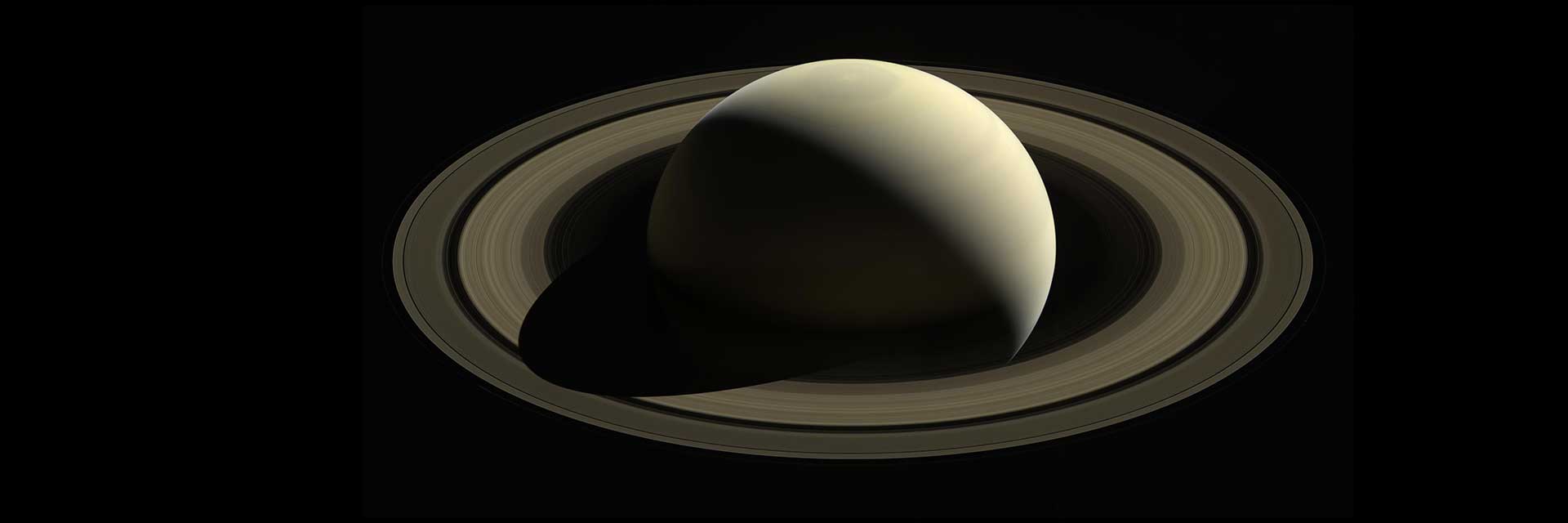
Saturn is the sixth planet from the Sun and the second largest in the solar system. Like Jupiter, it’s a giant ball of mostly hydrogen and helium with no solid surface — but it’s best known for its dazzling system of icy rings, visible even through a small telescope.
| Distance from Sun | 886 million miles (1.4 billion km) — 9.5 AU |
| Diameter | 74,897 miles (120,500 km) |
| Length of day | 10.7 hours |
| Length of year | about 29.4 Earth years (10,756 Earth days) |
| Moons | 274 confirmed moons |
| Atmosphere | Mostly hydrogen and helium |
Interesting facts
- Saturn is the farthest planet that can be seen with the naked eye from Earth.
- Saturn’s rings are made mostly of ice chunks, with a bit of rocky debris, ranging from tiny grains to mountain-sized pieces.
- Saturn has more confirmed moons than any other planet, including Titan, which is larger than the planet Mercury.
- One of Saturn’s moons, Enceladus, hides a global ocean beneath its icy shell and shoots geysers of water into space.
- NASA’s Cassini spacecraft orbited Saturn for 13 years, sending back detailed data before diving into the planet’s atmosphere in 2017.
- Saturn is the least dense planet in the solar system — it would float in water, if you could find a bathtub big enough.