Mercury
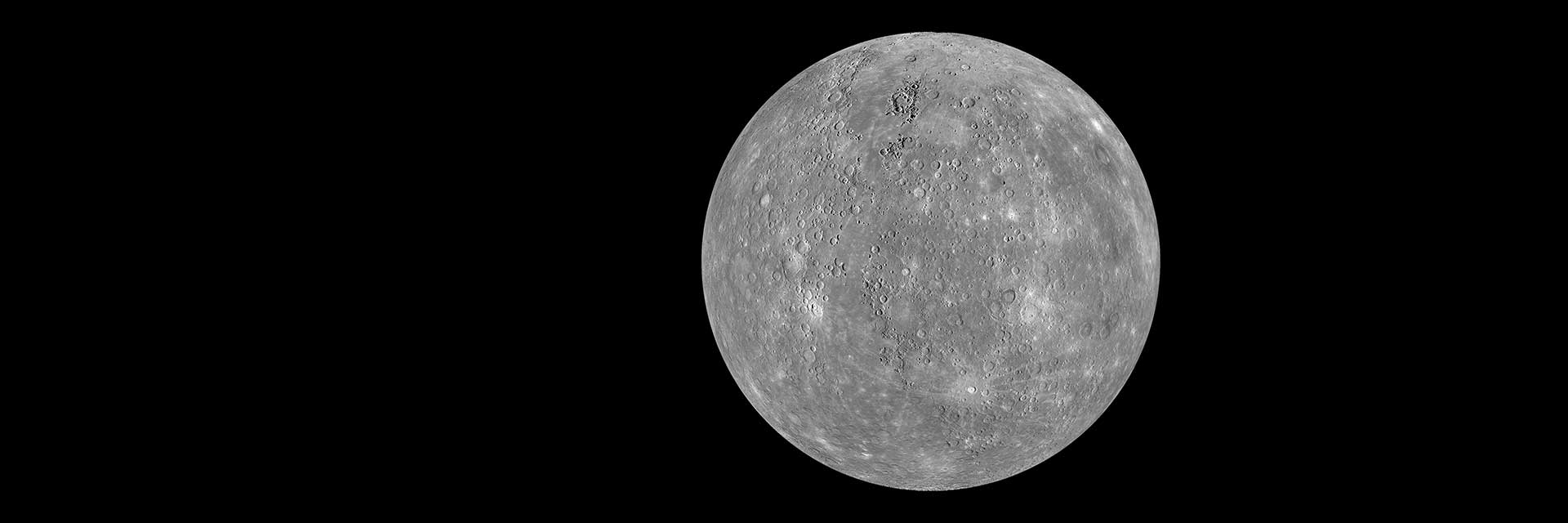
Mercury is the smallest planet in the solar system and the nearest to the Sun. It’s only slightly larger than Earth’s Moon, and it has no atmosphere to speak of — just a thin, wispy exosphere blasted off its surface by the solar wind. With nothing to trap heat, Mercury swings from blistering days to brutally cold nights.
| Distance from Sun | 36 million miles (58 million km) — 0.4 AU |
| Diameter | 3,032 miles (4,880 km) |
| Length of day | 176 Earth days (sunrise to sunrise) |
| Length of year | 88 Earth days |
| Moons | 0 |
| Temperature | 800°F (430°C) by day, -290°F (-180°C) by night |
| Atmosphere | Thin exosphere of oxygen, sodium, hydrogen, helium, potassium |
Interesting facts
- Mercury is the fastest planet, racing around the Sun every 88 Earth days — its name honors the swift Roman messenger god.
- Despite being closest to the Sun, Mercury isn’t the hottest planet — that title belongs to Venus, thanks to its thick, heat-trapping atmosphere.
- A single day-night cycle on Mercury (sunrise to sunrise) lasts 176 Earth days — longer than its entire year.
- Sunlight takes just 3.2 minutes to reach Mercury.
- Despite its scorching days, Mercury has water ice hidden in permanently shadowed craters near its poles.
- NASA’s MESSENGER spacecraft orbited Mercury for four years before deliberately impacting its surface in 2015.